
NASA and Google Test Robot for Future Deep-Space Missions
An early laboratory project explores how robots could help astronauts move equipment and supplies while keeping people in control.
By Reuven
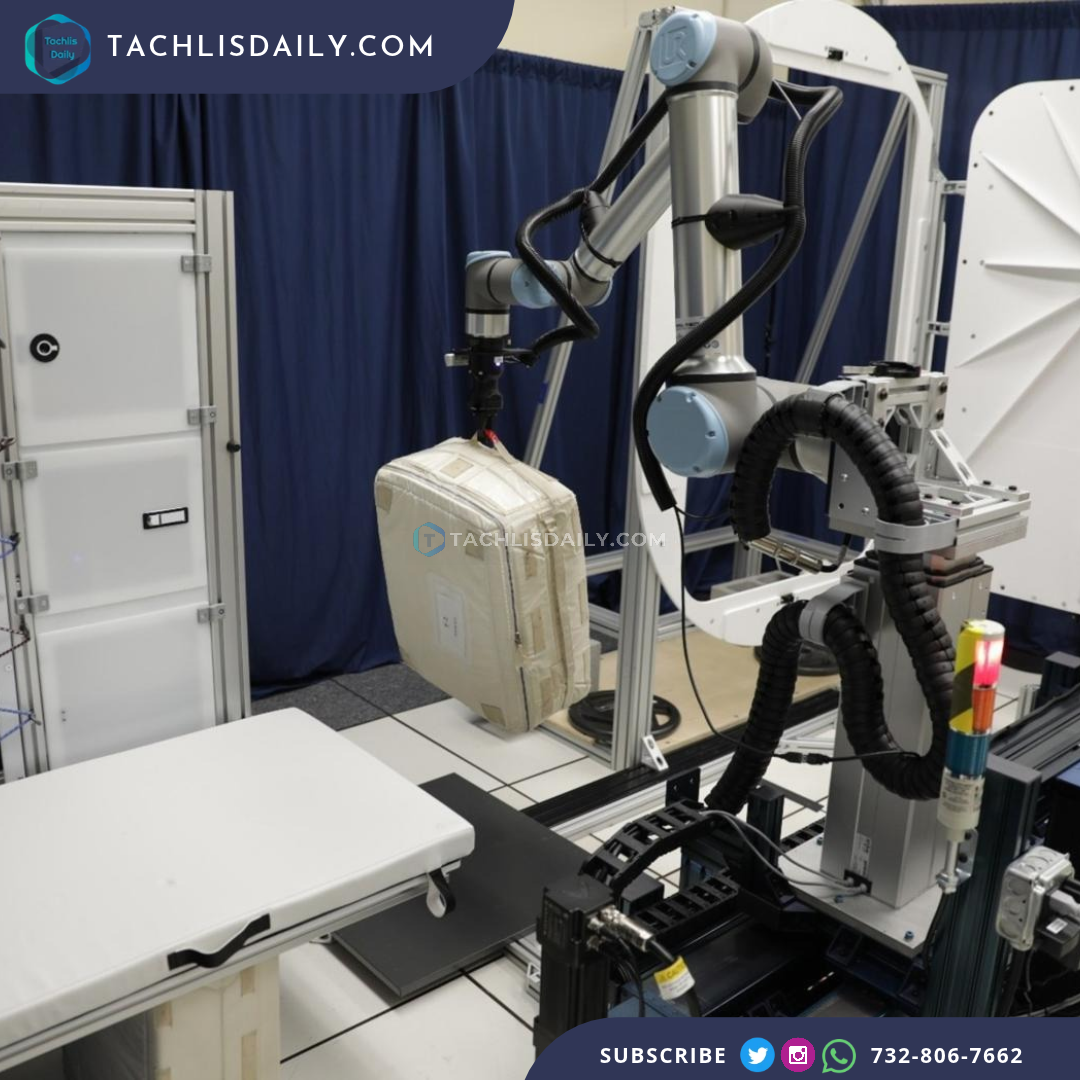
NASA and Google Public Sector are testing a robotic system that could help astronauts handle equipment and supplies on future deep-space missions, including tasks that support a human crew medical officer.
The effort is an early proof of concept, not a medical robot deployed in space. NASA's Human Research Program, Johnson Space Center Robotics Team and Jet Propulsion Laboratory are working with Google on the project.
In an initial laboratory demonstration at Johnson's iMETRO facility, the system was tasked with locating and moving a medical bag. Google said the open-source Pi0 model achieved an 85% baseline success rate on that task. The figure measures a laboratory handling exercise, not medical treatment or clinical outcomes.
The project combines simulation, cameras and computing hardware designed to help a robot understand its surroundings and move objects. Google said researchers fine-tuned the model on cloud computers and showed that it could then run locally on compact devices.
Local operation could matter on a future Mars mission, where round-trip communications with Earth can take up to 44 minutes. A crew could not always rely on immediate instructions from mission control.
Potential future uses include retrieving an ultrasound machine, organizing tools and helping with routine monitoring under a crew medical officer's direction. Those are development goals, not evidence that the robot can independently diagnose or treat a patient. Human supervision and decision-making remain central to the proposed system.
The accompanying NASA image shows equipment at Johnson's iMETRO facility in a September 2026 feature about its robotics team. It is not presented as a photograph of the specific Google demonstration.